
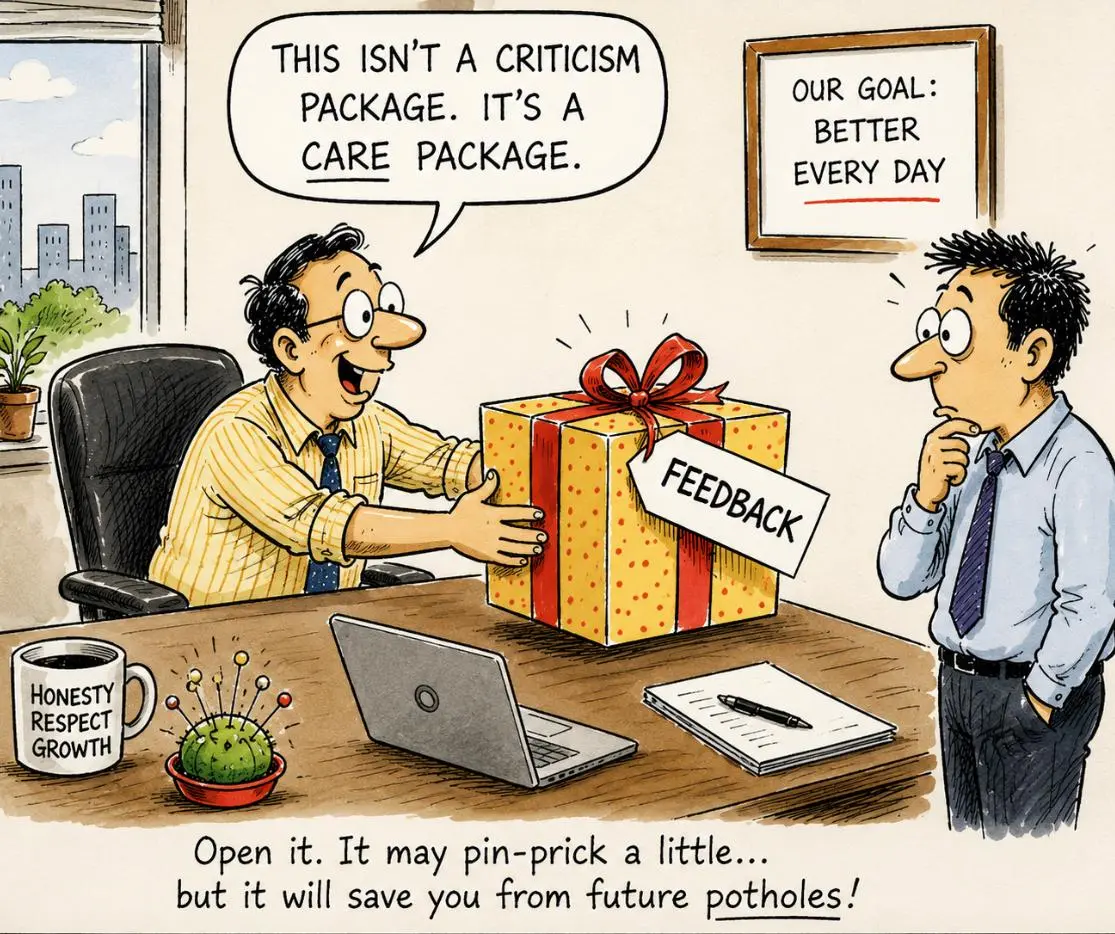
As leaders, one of our most important responsibilities is helping people become better than they are today. That responsibility requires two things from us at the same time.
First, our people must know that we genuinely care about them, not just for what they produce, but for who they are and what they can become. Trust is built when people believe that their leader genuinely wants them to succeed.
Second, when something needs to be said, we must say it. Delaying difficult conversations, avoiding constructive feedback, or hoping problems will correct themselves does a disservice to both the individual and the organisation. Silence is often mistaken for kindness, but it denies people the opportunity to learn and improve.
Feedback is one of the greatest gifts a leader can give. It should be timely, specific, and delivered with the sole intention of helping another person become more effective. Equally important, we must learn to seek feedback with the same enthusiasm with which we give it. Leaders who stop receiving feedback or get troubled when their work is critically examined does stop growing.
Honesty without respect achieves very little. People may comply for a while, but they rarely grow under fear or humiliation. The objective of feedback is never to prove that we are right. It is to help another person become more capable, more confident, and more successful.
The same principle applies to our leadership meetings. When someone’s work, decision or idea is questioned, it is never an attack on the individual. It is an examination of the idea. We are not there to embarrass anyone, defend our egos or score points. We are there to improve the quality of our thinking. Every challenge, every question and every disagreement should increase our collective wisdom, sharpen our judgement and lead to better decisions for the organisation.
Our teams should never have to wonder where they stand. They should know what they are doing well, where they need to improve and, most importantly, that we are committed to helping them succeed.
Leadership is not measured by how comfortable our conversations are. It is measured by how many people become better because they worked with us. If every difficult conversation is guided by genuine intent, mutual respect, and a commitment to each other’s growth, we will build not only a stronger organisation but also stronger leaders.